Free written quotes for forestry mulching, brush removal, lot clearing, and grading — connected to a local Gilbert-area operator.
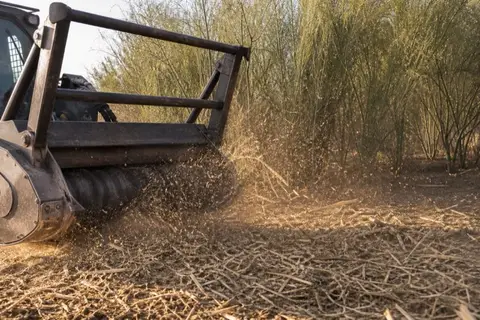
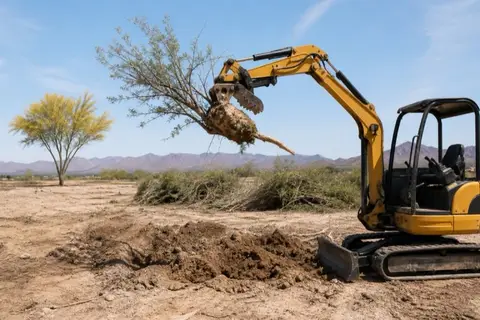
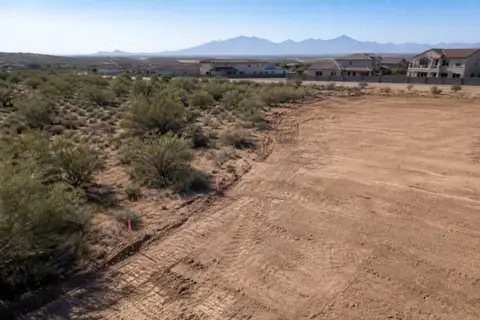
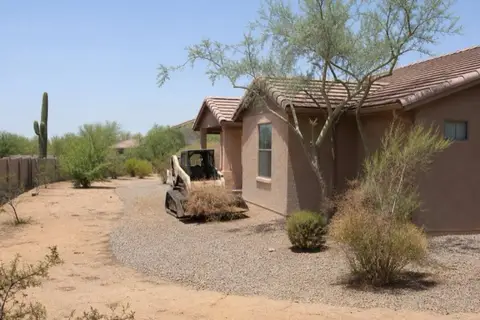
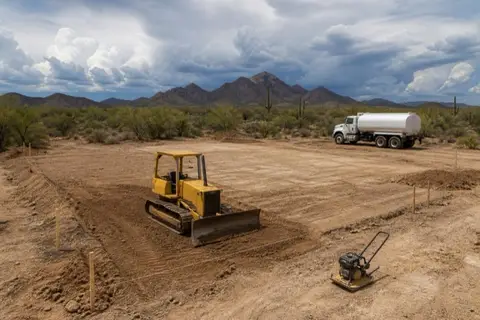
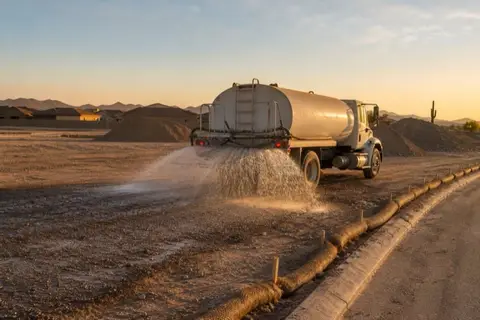
Hay Capital Land Clearing routes Gilbert property owners to a local operator equipped for the Southeast Valley's two kinds of ground: retired farmland gone to tumbleweed and volunteer mesquite, and raw Sonoran desert lots thick with palo verde and creosote. The toolkit matches the terrain — drum-style mulching heads that grind brush where it stands, compact excavators that grub mesquite root crowns whole, water trucks and track machines sized for Maricopa County's Rule 310 dust rules — and every job is planned around the state's native-plant notice requirements, with standing saguaros treated as immovable from the first walk-through.
Every parcel gets matched to the right method before it gets a number: mulching where chips can stay down as ground cover, grubbing where a pad or driveway is coming, mowing and hauling where tumbleweed took a fallow field. The quote spells out which — and why.
Describe the parcel — a local land clearing contractor calls back with a real number.
Most Phoenix-area mulching and brush jobs on a half-acre to an acre land somewhere between $1,500 and $4,000, while full lot clears with haul-off and rough grading commonly run $1,500 to $5,500 depending on vegetation density and access. Thick mesquite over caliche prices differently than tumbleweed on old ag ground, which is exactly why every request through this site comes back as a written quote with the machine time, haul-off, and dust measures each given a line.
Often, yes — two separate rules apply. Disturbing a tenth of an acre or more of ground in Maricopa County triggers a Rule 310 dust-control permit before the first bucket moves. Separately, Arizona's native-plant law says the state Department of Agriculture must be notified 20 to 60 days before protected species on the parcel are destroyed, with the lead time set by acreage. The contractor pricing your job walks the parcel with both in mind and folds the paperwork into the plan.
Treat every saguaro on your parcel as a fixture. The species sits in the most protected tier of Arizona's native-plant law, and the projects arranged through this site are laid out so machines route around standing saguaros entirely — pads shift, driveways curve, mulching lines stop short. If a cactus genuinely cannot stay where it is, that becomes a state-level salvage question handled through the Department of Agriculture, not something a clearing machine decides on a Tuesday.
It depends on what the ground is for. Mulching shreds mesquite and brush where they stand and leaves the chips as a dust-holding ground cover — fastest and cheapest when the goal is a clean, open parcel. Grubbing digs the root crowns out, which is the right call under a future building pad, pool, or driveway where regrowth or a rotting root has no business being. Many Gilbert jobs mix the two: grub the footprint, mulch the rest.
October through May is the comfortable window — hard clear light, cool mornings, and firm ground. Monsoon season, June 15 through September 30, brings the complications: sudden storms, soft spots on irrigated ground, and blowing dust that makes water-truck discipline non-negotiable. Work happens year-round here, but summer jobs get scheduled around the sky, so a quote requested in spring usually books faster than one requested in July.
A local operator, not this website. Hay Capital Land Clearing is an independent local marketing site: it takes your call or form, hands the details to a land clearing contractor working Gilbert and the Southeast Valley, and that contractor walks the parcel, writes the quote, and runs the equipment. The site may earn a referral fee for the introduction — the price you're quoted is the contractor's own.
 Hay Capital